
Trekell Pro Team Artist Alex Garant explains why she avoids traditional hog bristle oil brushes and instead relies on soft synthetic Mop brushes and Golden Taklon brushes to create smooth, controlled oil paintings.
Rethinking “Traditional” Oil Painting Brushes
When most artists think about oil painting, they picture stiff hog bristle brushes loaded with thick paint. These brushes have been the traditional choice for generations and they are still the perfect tool for many painters.
Alex Garant takes a different approach. Despite being an oil painter, she does not use traditional oil painting brushes for her oils. For the kind of smooth blends and clean edges she wants, the standard hog bristle brush works against her goals instead of supporting them.

Why Hog Bristle Brushes Are Not Her Preference
Traditional oil painting brushes are typically made with hog bristles that are designed to move heavy bodied paint across the canvas. The stiff hairs can create bold, expressive marks and visible texture.
Alex finds that same stiffness leaves brushstrokes in the paint and can even lift wet paint from the surface when too much pressure is applied. Rather than fighting these qualities, she prefers to work with brushes that naturally support the finish she is aiming for.

What Soft Synthetic Brushes Do Differently
Instead of hog bristles, Alex paints almost exclusively with soft synthetic brushes. Their softer fibers glide across the surface, allowing the paint to level more smoothly and giving her greater control over each transition.
One of the differences she notices most is opacity. Because the brush lays paint down evenly, she can work with very thin layers that still cover well. She does not have to build up thick applications of paint just to hide the underpainting. Simply choosing a softer brush changes how opaque those thin layers can be.

Smooth Transitions and Clean Edges
Alex’s portraits rely on subtle shifts in value and color. Whether she is blending facial features or creating her signature doubled imagery, she wants every transition to feel soft and intentional.
Soft synthetic brushes help her apply thin, opaque layers of paint, blend smooth transitions between colors, maintain crisp edges where needed, reduce visible brushstrokes and create the buttery surface that has become a hallmark of her work. For her, the goal is for the brush to disappear so the painting itself takes center stage.
The Trekell Brushes Alex Uses Most
Alex owns many brushes but she reaches for a few favorites in almost every painting. Her go to Trekell tools are:
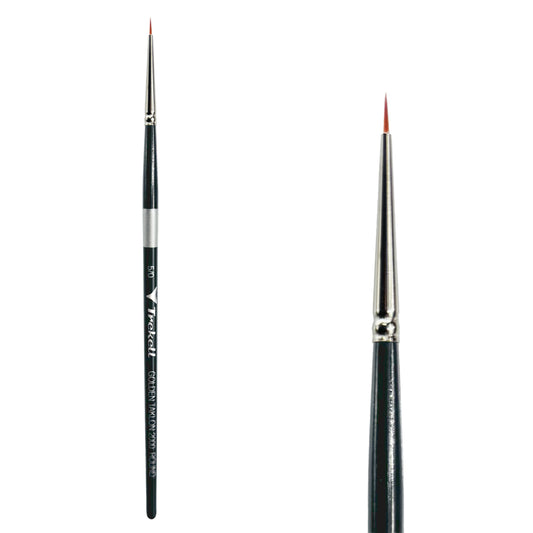
- #5/0 Golden Taklon Round for detail work, controlled edges and smaller shapes.
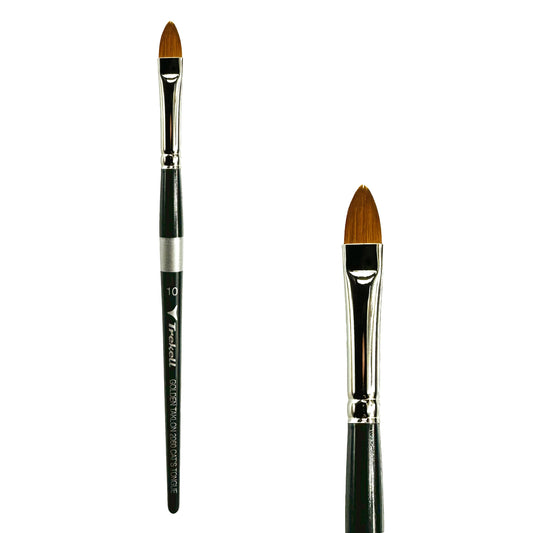
- #10 Golden Taklon Cat’s Tongue for versatile blending, soft edges and strokes that can be broad or precise.
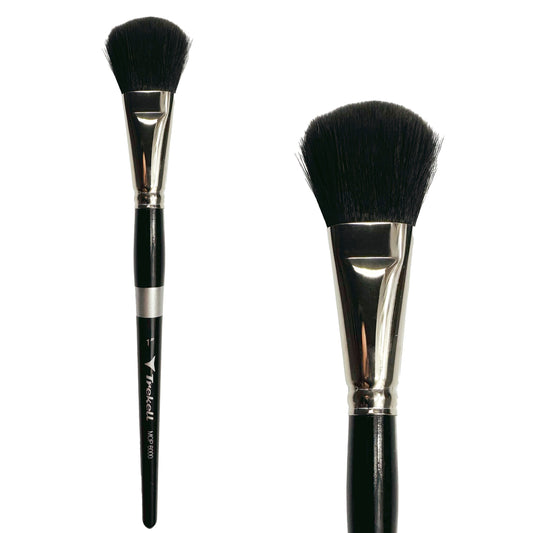
- 1" Mop Brush for creating the smooth transitions and buttery finish she is known for.
Together, these soft synthetic brushes give her the precision and control she needs from the first layer through the final blend. She treats them as her main oil painting brushes even though they are often labeled for acrylic or general use.

There Is More Than One Way to Paint
Alex is quick to point out that her choices are not a universal rule. Many oil painters love the character and texture that hog bristle brushes create and build their style around heavy paint and visible marks.
Her preference reflects the kind of work she creates. The best brush is the one that supports your own painting style, not necessarily the one that is considered traditional. If you value smooth blends, thin opaque layers and controlled edges, softer synthetic brushes may be worth exploring.
What You Can Take from Alex’s Approach
If you find yourself fighting visible brushstrokes or struggling to get subtle blends with traditional oil brushes, Alex’s process suggests another option. Trying soft synthetic mop brushes and Golden Taklon brushes in your oil work can change how your paint sits on the surface and how easily you can control transitions.
Experimenting with brush type, rather than only changing paint or medium, might be enough to give you the smoother, more buttery finish you are looking for.