
For Trekell Pro Team Artist Greg “Craola” Simkins, a new painting began with an old influence. Drawing from childhood memories of classic animation, Greg built a new acrylic painting from a vintage cartoon-inspired moon, an unexpected title and a process that moves from atmosphere to focal point.
Sometimes a new painting begins with an old influence.
For his latest piece, Greg wanted to reconnect with the feeling of paintings from earlier in his career, when childhood memories and the cartoons he grew up watching played a major role in his work.
What started with a moon inspired by vintage cartoon backgrounds eventually became Fly Me to the Moon River, a painting that combines nostalgia, imagination and Greg’s approach to building depth with acrylic.
Watch Greg’s painting come together below.
Looking Back for Inspiration
Greg began this piece by thinking about paintings from earlier in his career, particularly Elmer’s Heartache.
“I wanted to make a painting that felt like the pieces I did early in my career, similar to Elmer’s Heartache, where I lean heavily on my childhood memories of classic Disney and the golden era of cartoons.”
Those early influences gave Greg a starting point, but the full composition was not planned before he began.
When he drew the moon, Greg already had a vintage cartoon background reference in mind. Then another connection appeared.
“The name Fly Me to the Moon River, a combination of the two songs, popped in my head and the idea of the airplane appeared.”
One idea led naturally to another. The moon suggested a title, and the title suggested a new image. Instead of forcing the entire concept at the beginning, Greg allowed the painting to develop through association.

Start with the Atmosphere
Greg’s acrylic process begins with the farthest areas of the composition and moves gradually toward the foreground.
“As an acrylic painter, I always work from the furthest area in the back toward my foreground,” he says.
Starting in the distance gives him room to establish the environment before committing to the most important area of the painting. He can use washes, fogging and atmospheric perspective to build depth and adjust the space as the image develops.
By the time he reaches the foreground, the painting already has an established sense of air, distance and mood.

Use Contrast to Direct the Eye
Working from the background forward also helps Greg control where the viewer looks.
Distant areas can remain softer and lower in contrast, allowing them to support the scene without competing for attention. As he moves toward the focal area, Greg can introduce more clarity and stronger value contrast.
“That way when I get to my focal area, I can put the most contrast in to draw the eye,” Greg explains.
This creates a clear visual hierarchy. The background establishes the world of the painting, while the most distinct edges, lightest lights and darkest darks help lead the viewer toward the main subject.

Choose Brushes for the Marks You Need
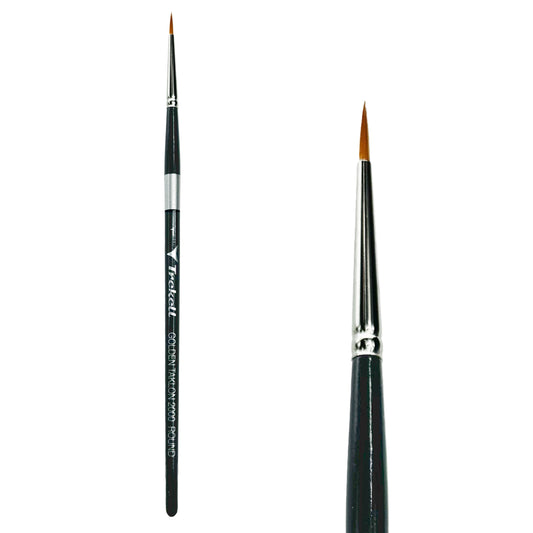
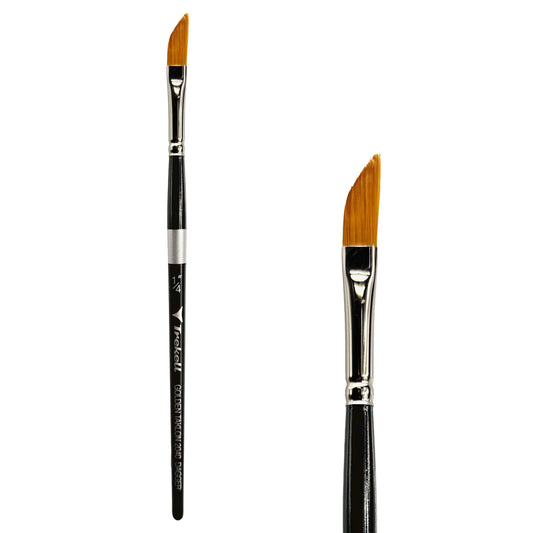
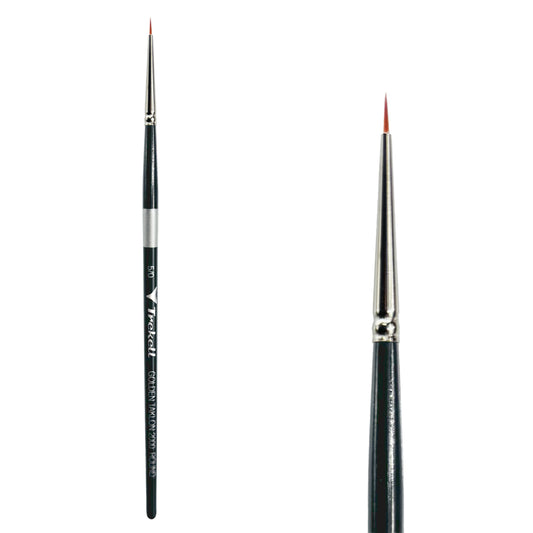
Greg used several Trekell Golden Taklon brushes throughout the painting. Although he works with a variety of shapes, he found himself returning most often to a few brushes during this piece.
- Trekell Golden Taklon #1 Round
- Trekell Golden Taklon 1/4" Dagger
- Trekell Golden Taklon 5/0 Round
- Trekell Golden Taklon #10 Cat’s Eye
Rounds are a regular part of Greg’s painting process, and the smaller Round brushes gave him control as he moved into more refined passages. The #10 Cat’s Eye was especially useful for blending.
Using several brush shapes gave Greg options as the painting moved from broader atmospheric areas into smaller, more defined forms.

Why a Smooth Panel Matters
Greg painted Fly Me to the Moon River on a Trekell Gesso Primed Cradled Hardboard Panel.
For smaller paintings, he prefers a smoother surface because he does not want canvas texture to become too visible when a finished painting is photographed or scanned.
“I like smaller pieces to be a bit smoother and will even sand with smooth sandpaper before beginning to add paint,” Greg says.
The firm hardboard surface gives him a stable base for acrylic painting, and its prepared gesso surface can be sanded further when he wants an even smoother finish.

Let One Idea Lead to Another
Fly Me to the Moon River did not begin as a completely planned composition.
It began with Greg looking back at the childhood influences that shaped some of his earlier work. A vintage cartoon reference suggested the moon. The moon inspired a title. The title led to the airplane.
Then Greg’s process took over, building the world of the painting from the atmosphere of the background toward the focal point in the foreground.
It is a useful reminder that inspiration does not always arrive as a finished idea. Sometimes the first connection is enough.
Follow it, develop it and see where it takes you.

The Takeaway
Greg “Craola” Simkins shows how a painting can develop from a small spark of inspiration rather than a fully finished plan.
By revisiting the visual language of childhood cartoons, allowing one association to lead to another and building the composition from background to foreground, he created a painting with atmosphere, depth and a clear focal point.
The next time you begin a painting, pay attention to the first idea that captures your interest. It may be a color, a memory, a reference image, a title or a shape.
You do not need to know exactly where it will lead before you begin.