
Hog bristle brushes are not just for thick paint and bold brushstrokes. Trekell Pro Team Artist Julie Beck uses them to establish thin first layers, focus on larger shapes and keep herself from getting lost in details too soon.
“Today I am coming to you with the gospel of the hog bristle,” Julie says.
Julie works in highly rendered realism and trompe-l'œil, creating paintings that give the illusion of real objects. A firm, assertive brush might seem like an unexpected choice for that kind of work. Why reach for something that feels less precise when your finished painting depends on careful observation and control?
For Julie, that is exactly the point. During the first layer, she does not want a brush that encourages her to finish every detail. She wants one that helps her establish the bigger picture.
Her approach shows how the same hog bristle brush can create generous, painterly marks or spread oil paint into a thin initial layer, depending on how she uses it.
What Makes Hog Bristle Brushes Different?
Hog bristle brushes are made with natural hog hairs. Julie describes their feel as resistant, assertive and durable. She values those qualities when she wants to move paint rather than delicately smooth it.
They can carry a generous amount of paint and leave visible bristle marks in the surface. For Julie, that makes them useful when she wants “big, luscious, painterly marks.”
She contrasts that handling with brushes such as Trekell Spectrum and Golden Taklon, which she reaches for when she wants smoother, more evenly distributed paint. Those smoother marks suit the polished skin, refined surfaces and carefully rendered passages she often paints.
Neither approach replaces the other. Julie chooses the brush according to the kind of mark she wants and the stage of the painting she is working on.

Why a Realist Painter Uses a Less Precise Brush
When you enjoy painting details, it can be tempting to start refining them before the larger color and value relationships are established.
Julie uses hog bristles to interrupt that habit.
“In my first layer of paint, my intention isn’t to go into details,” she explains. “I’m intentionally stopping myself from being able to get into those details.”
The firmer, less delicate handling keeps her focused on general color, larger shapes and values, or the relative lightness and darkness of an area. Rather than asking the first layer to look finished, she uses it to set up what comes next.
“These brushes intentionally make me a little bit more clumsy,” Julie says.
That limitation helps her stay focused on what the first layer needs. She can establish the foundation without getting distracted by small details that belong later in the process.
Using Hog Bristles for a Thin First Layer
Although hog bristles can leave substantial texture, Julie also uses them when she wants very little texture at all.
In the painting demonstrated in her video, she applies oil paint straight from the tube and uses the firm bristles to scrub it into a thin layer. She does not use solvent in that first layer.
Instead of thinning the paint with solvent, she relies on the brush to move and distribute it across the surface.
“I’m trying to get no texture,” she explains. “I’m trying to scrub down some paint.”
Her goal is coverage without a heavy buildup of paint, giving her a general color and value foundation for the more rendered work to follow.
What Julie Focuses on in the First Layer
- Establishing broad areas of color and value.
- Keeping the paint application thin.
- Avoiding unwanted surface texture.
- Resisting the urge to refine small details too early.
- Moving paint with the brush rather than relying on solvent to make it flow.

Reducing Reliance on Solvents
Julie prefers to use as little solvent as possible. In this demonstration, the firmness of the hog bristles allows her to work directly with tube paint while still spreading it thinly.
She also raises a concern about thinning oil paint with too much solvent. Instead of adding solvent to make the paint spread more easily, she uses the brush to work it into a thinner application.
This is one way Julie reduces solvent use in her own process. It does not mean every painter needs to work the same way.
Reducing solvent use does not replace other studio precautions. Follow the safety information for your paints, mediums and cleaning products. Working without solvents does not mean that every material or technique is without risk.
One Brush, Two Different Kinds of Marks
Julie’s demonstration challenges the idea that hog bristle brushes are only useful for thick, expressive painting.
She uses their firmness in two different ways:
- For painterly passages, she loads the brush with more paint and allows the bristles to leave visible marks.
- For a thin first layer, she works the paint across the surface, aiming for broad coverage without prominent texture.
The brush does not determine the finished style by itself. The amount of paint and the way Julie handles it help determine whether the result is a textured passage or a restrained foundation for realism.
That versatility is why she finds hog bristles useful for both alla prima painting and paintings developed over multiple layers. When working alla prima, she paints wet into wet. For her more rendered work, she uses the bristles to establish a thin foundation before developing the painting further.
Julie Beck’s Favorite Hog Bristle Brush Shapes
Julie highlights three shapes she enjoys using, each with a different role in her process.
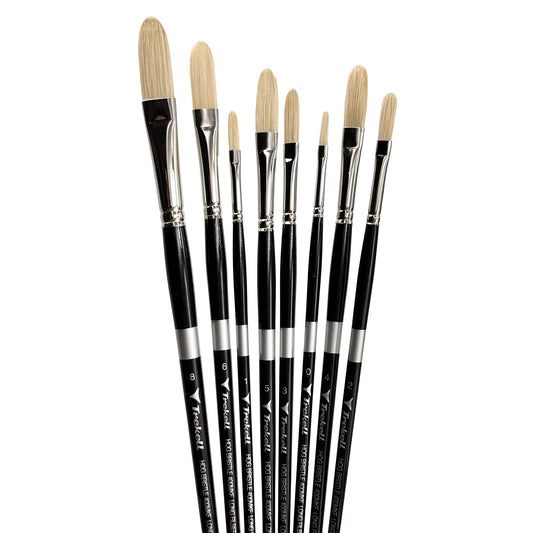
Long Filberts: Her Favorite for the First Layer
“I would definitely recommend the long filberts,” Julie says. “Those are my go-to for my first layer.”
She reaches for them when she wants to establish general color and value without becoming absorbed in detail. If you are interested in trying her approach to the first layer, this is the shape she recommends most directly: Trekell Hog Bristle Long Filberts.
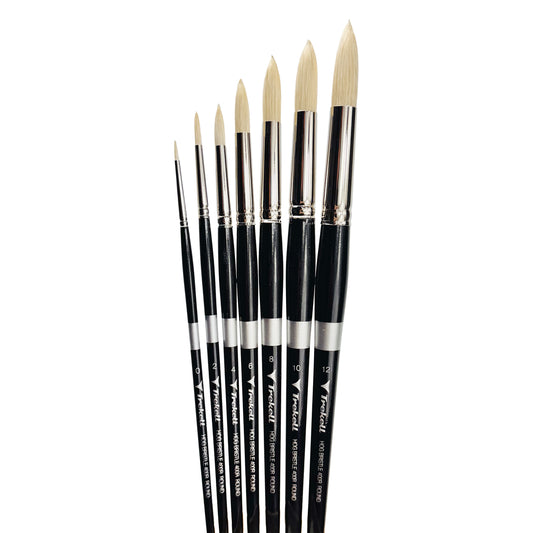
Rounds: Another Shape She Enjoys
Julie also mentions that she has been enjoying the Hog Bristle Rounds. They give her another option for working with the firm, assertive handling she values in natural bristles.
Fans: Blocking In Larger Masses
For alla prima work, Julie has been reaching for Hog Bristle Fans to establish larger masses quickly.
“I just want to block some stuff in and get some masses down super quickly,” she explains.
Rather than reserving the fan for finishing touches, she uses it to block in larger areas early in the painting.
Try Julie’s Hog Bristle Approach
Explore Trekell Hog Bristle Brushes for thin first layers, broad areas of color and expressive paint handling. Julie’s favorites include Long Filberts, Rounds and Fans.
Want the brushes Julie picked for her own set? Shop the Julie Beck 7 Piece Brush Set
Let the Brush Support the Stage of the Painting
Julie’s approach is not about giving up precision. It is about choosing when to use it.
In the first layer, she wants a brush that helps her generalize. Later, she can turn her attention to the refined edges, smooth surfaces and small details that define her finished work.
Hog bristles give her a way to establish that foundation, spread paint thinly without solvent in this demonstration, and make more expressive marks when she wants them.
For a realist painter, a brush that feels less precise can serve a very precise purpose.